Restoring Two 20 Foot Tall Windows in McLean County
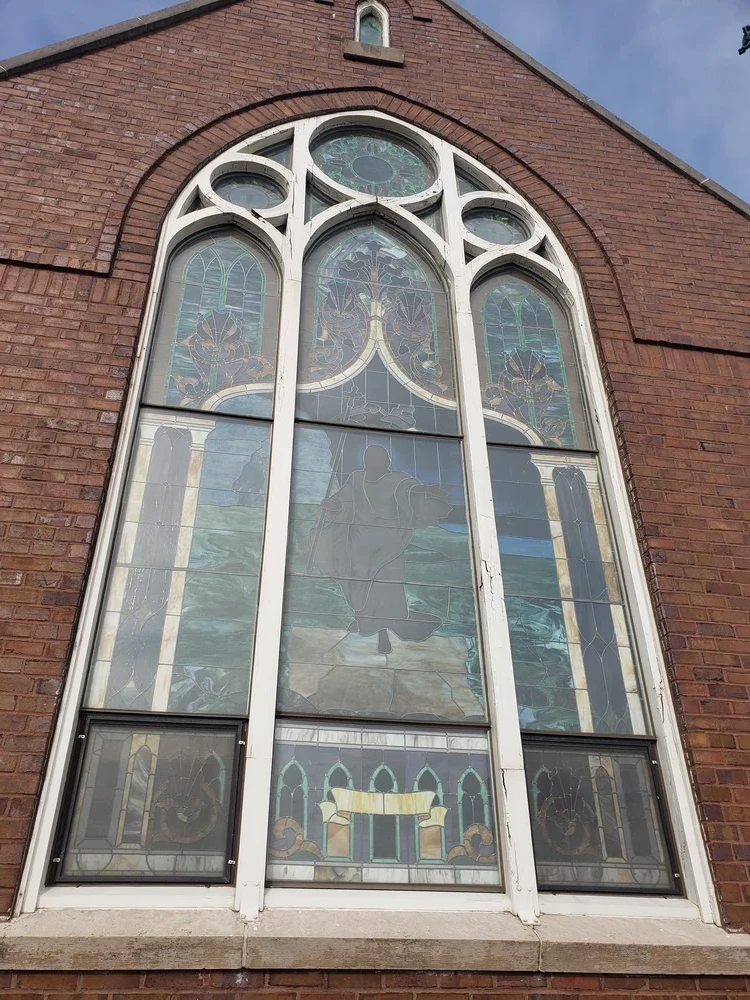
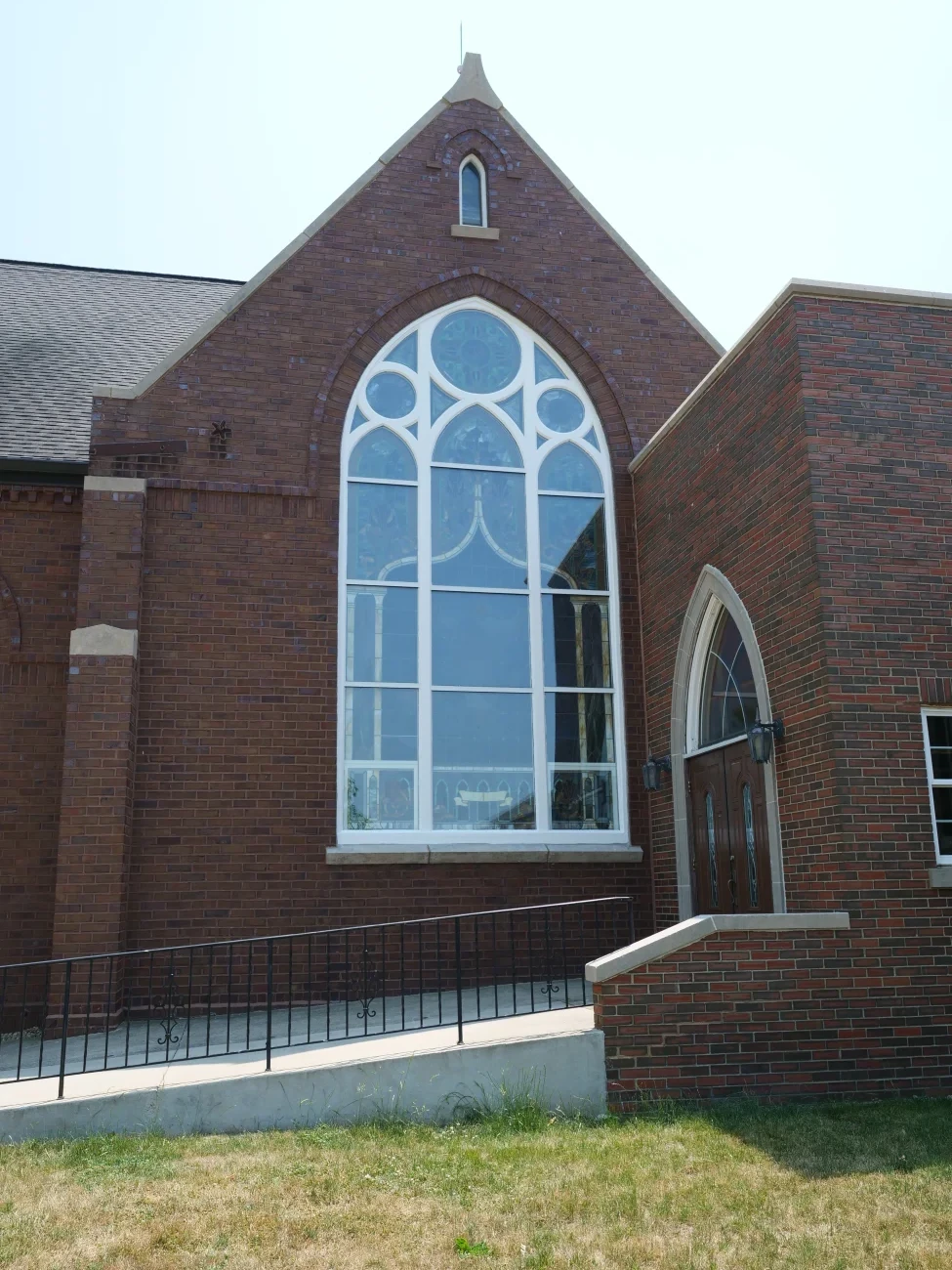
A historic country church faced the challenge of restoring its two towering 21-foot stained glass windows. What began as a straightforward cleaning and reframing project turned into a months-long journey, complicated by unexpected supply chain delays.
Project Video
Project Overview
Stained glass restoration presents unique challenges, particularly when dealing with fragile materials and aging structures. This project required the careful removal, restoration, and reinstallation of large stained glass windows, along with the fabrication of custom framing and protective storm glass—all while overcoming significant structural and supply chain obstacles.
Removal and Transport
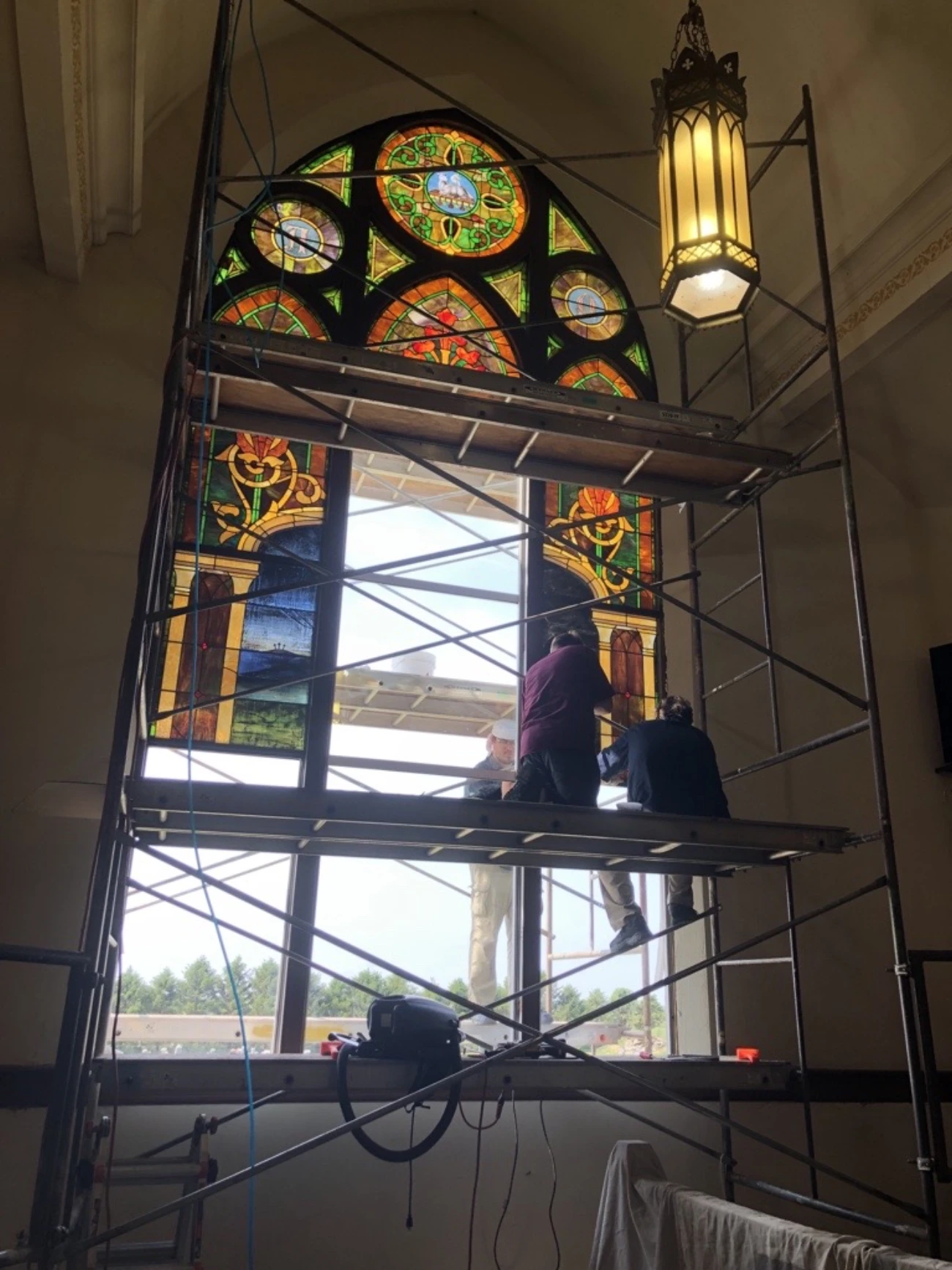
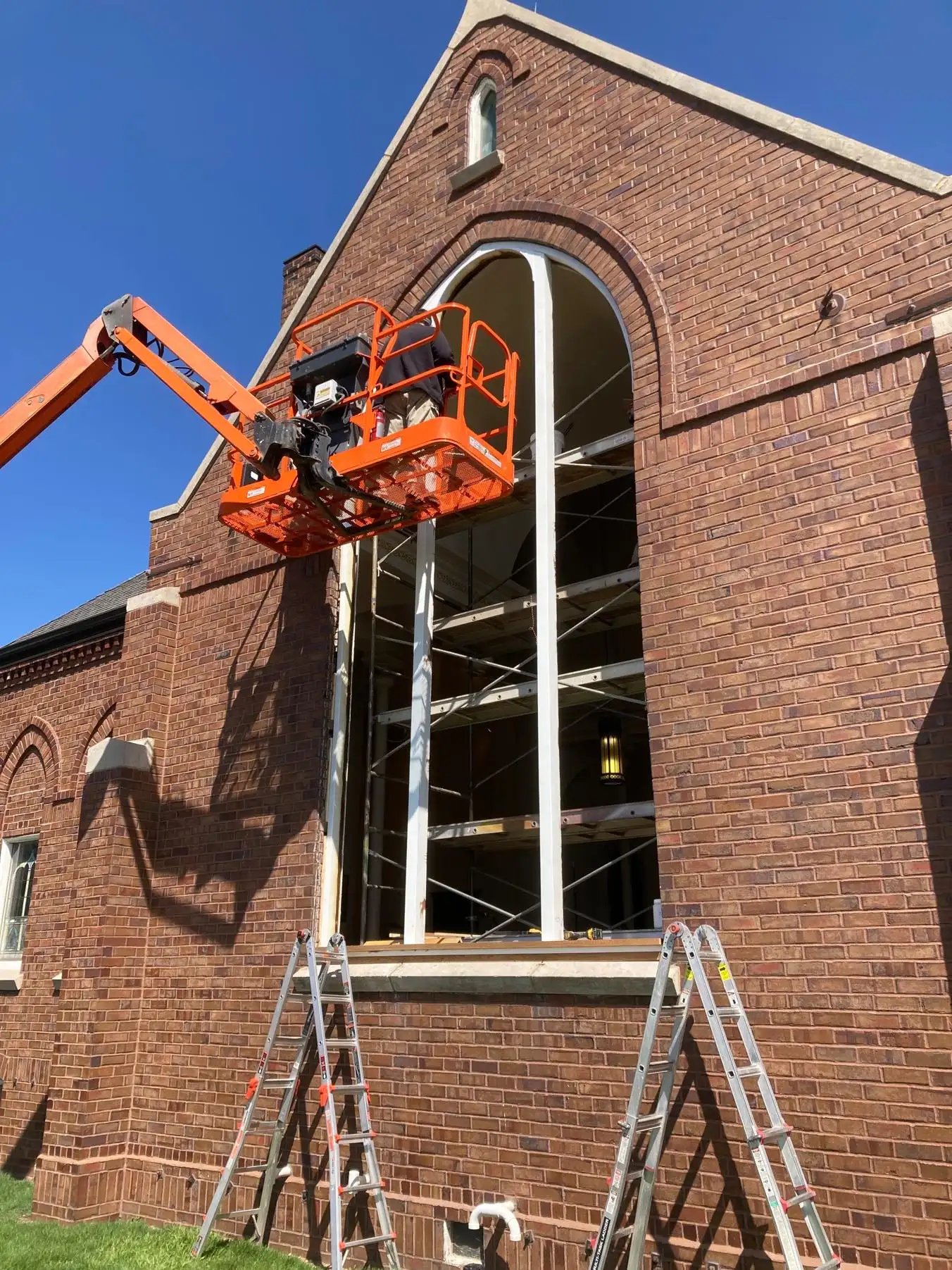
Removing aged stained glass is a delicate operation. Over time, the lead came that holds the glass together becomes brittle, increasing the risk of breakage. To mitigate this, each panel was removed individually and in small sections, then carefully passed down through three layers of scaffolding to ensure safe handling.
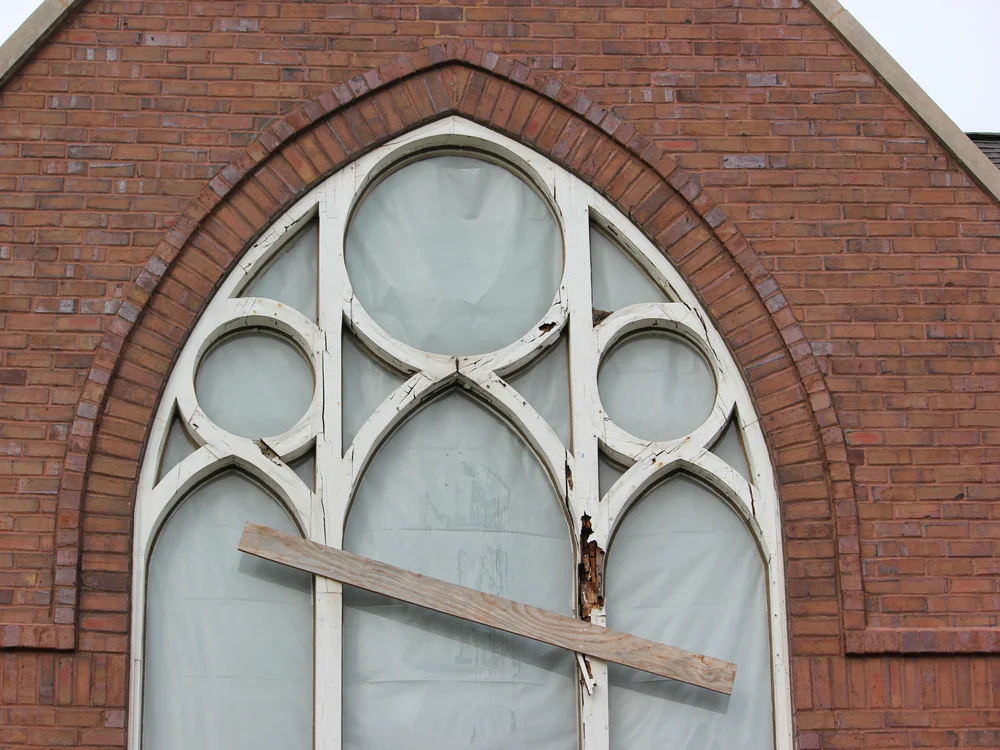
Once removed, the window openings were sealed with precisely cut plywood inserts to maintain the interior climate of the church. These temporary coverings required custom fitting to match the complex contours of the original window apertures. The stained glass was then securely transported to Heritage Restoration’s glass studio in Peoria.
Studio Restoration Work
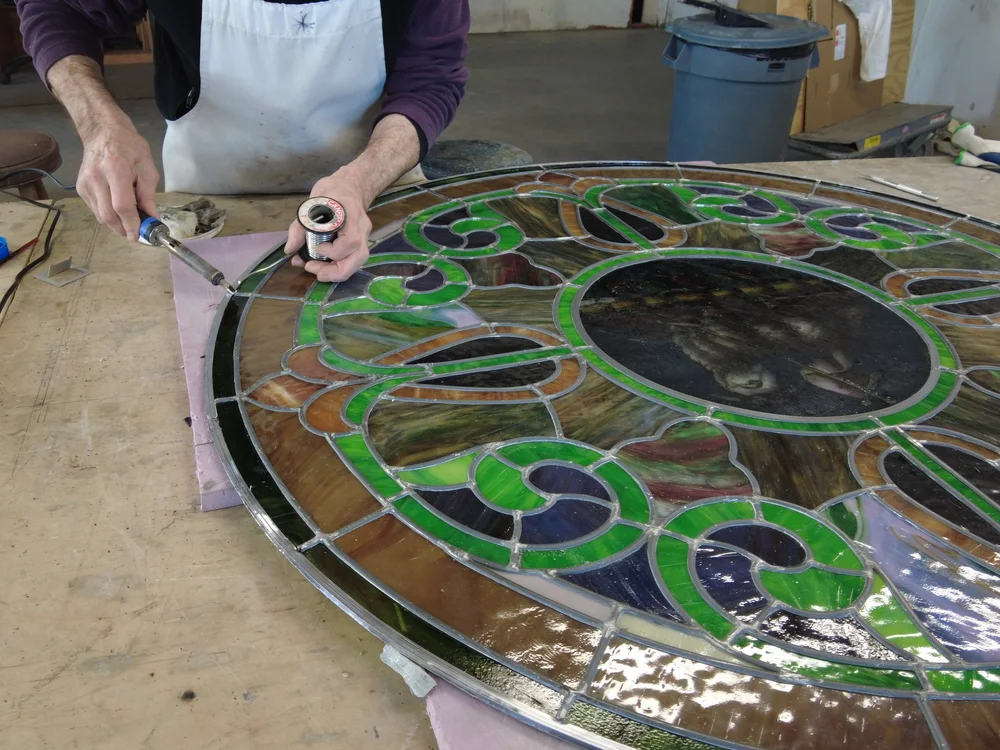
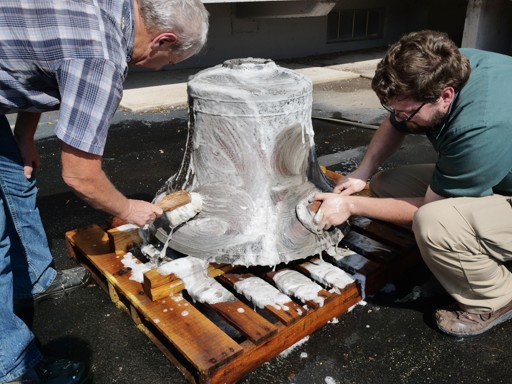
At the studio, panels with deteriorated lead were fully disassembled and re-leaded using fresh came. Each piece of glass was meticulously cleaned to remove years of dirt, debris, and especially the white dust of lead oxide—a toxic byproduct of aging lead. This process took several weeks to complete, ensuring the panels were safe and structurally sound for reinstallation.
In parallel, templates of the window openings were used to fabricate custom-fitted storm glass. This new protective layer would be installed along with the stained glass to help safeguard it from future environmental damage.
Framing and Structural Adjustments
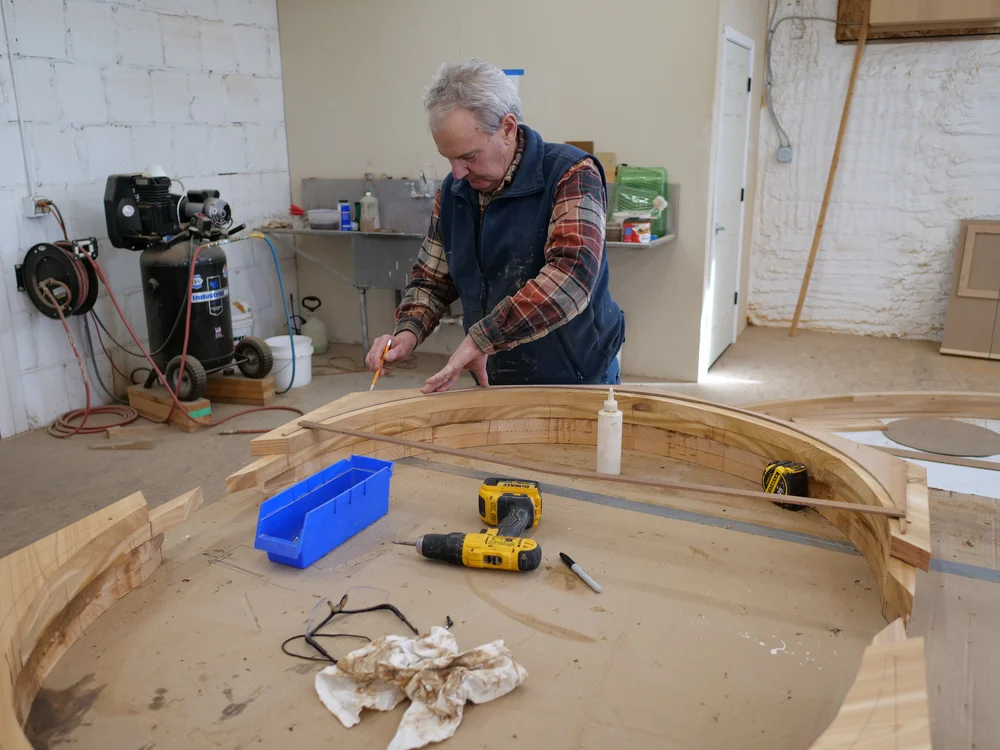
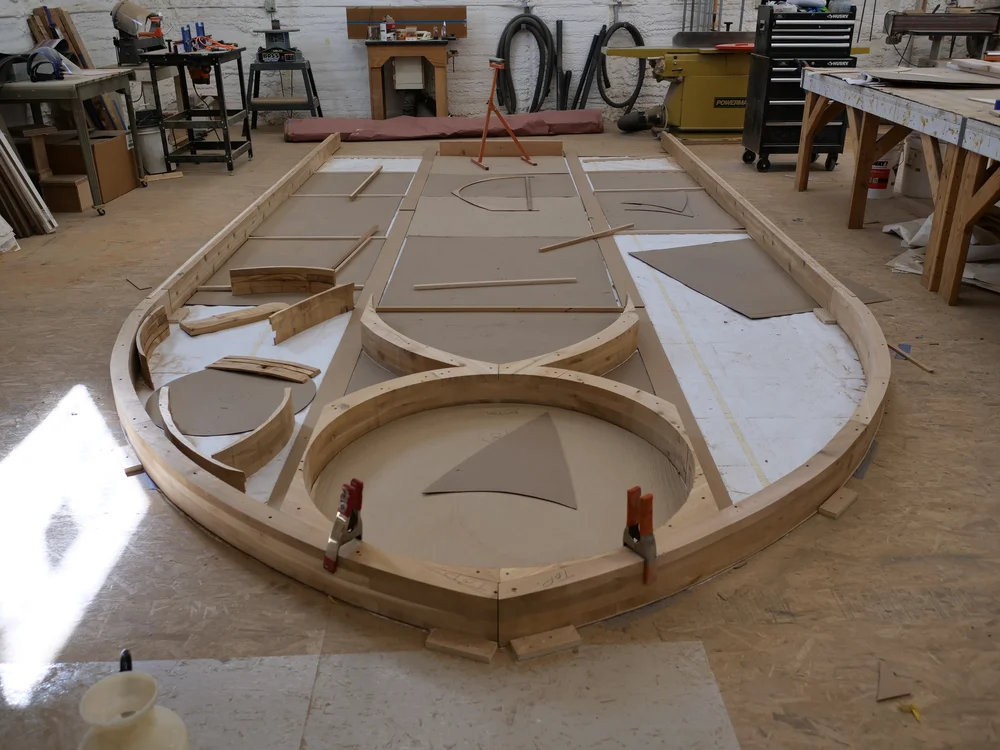
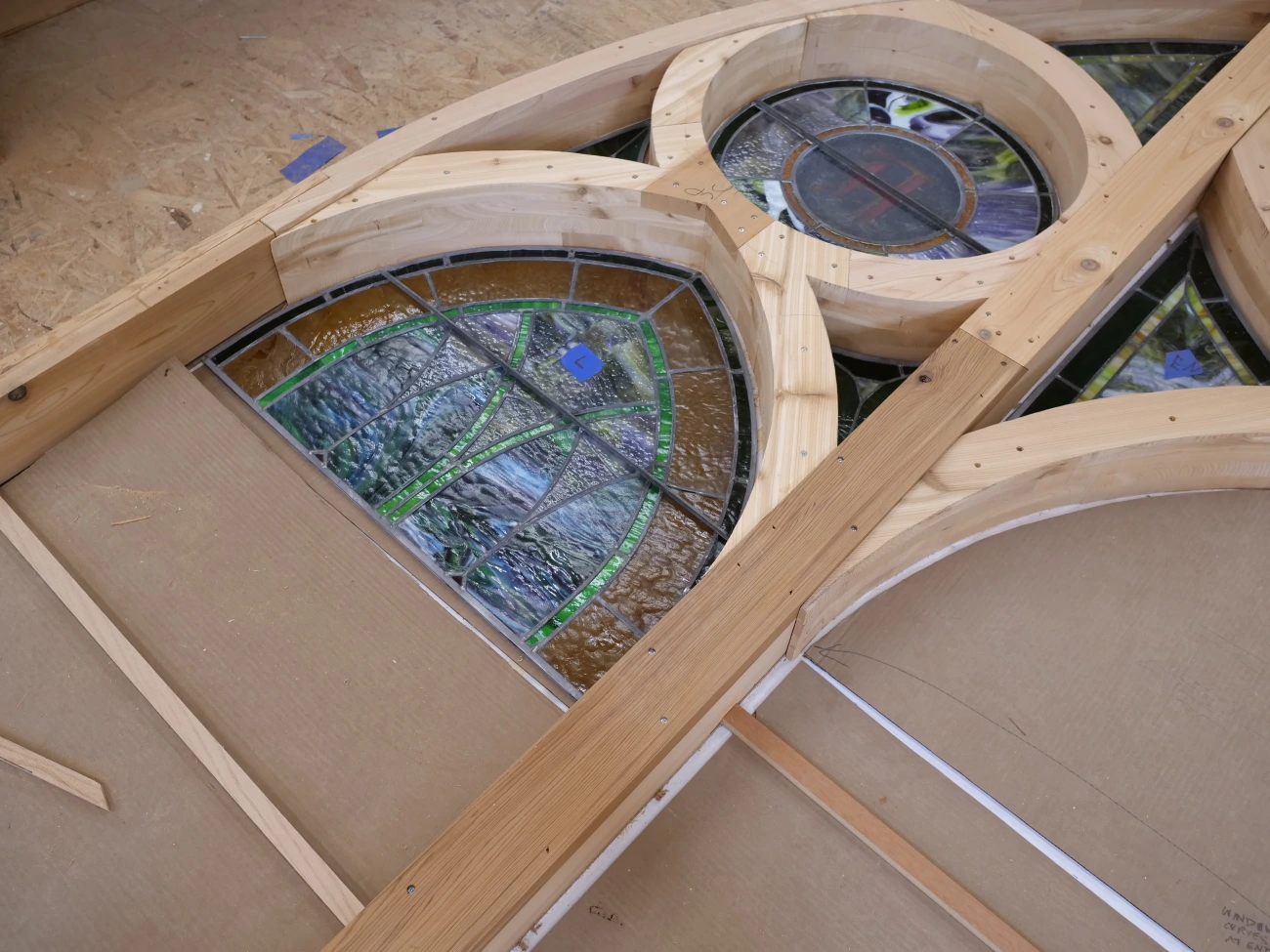
Initially, aluminum framing was planned to replace the original wooden support structure. However, due to post-lockdown supply chain delays, no fabricator was available to construct the required 21-foot custom frames. As a solution, Heritage collaborated with the client to design and build new wooden frames in-house. The lumber used was specially treated for moisture resistance and durability against harsh Midwest weather.
Frame construction lasted two months, requiring precise shaping to match the arched layers of the stained glass. Several protective coatings were applied to provide both the correct exterior color and long-term weatherproofing. Multiple dry-fit tests were performed to ensure each panel sat securely within the frame, without gaps that could jeopardize structural integrity.
Installation and Final Challenges
The final stage of the project involved addressing a significant challenge: the existing stone window openings were warped due to age. To compensate, a custom interior bracing system was engineered and installed to securely hold the new frames in place. This bracing required a full week of on-site labor to install correctly.
With the structural support in place, the stained glass and storm glass were installed successfully, completing the restoration.
Conclusion
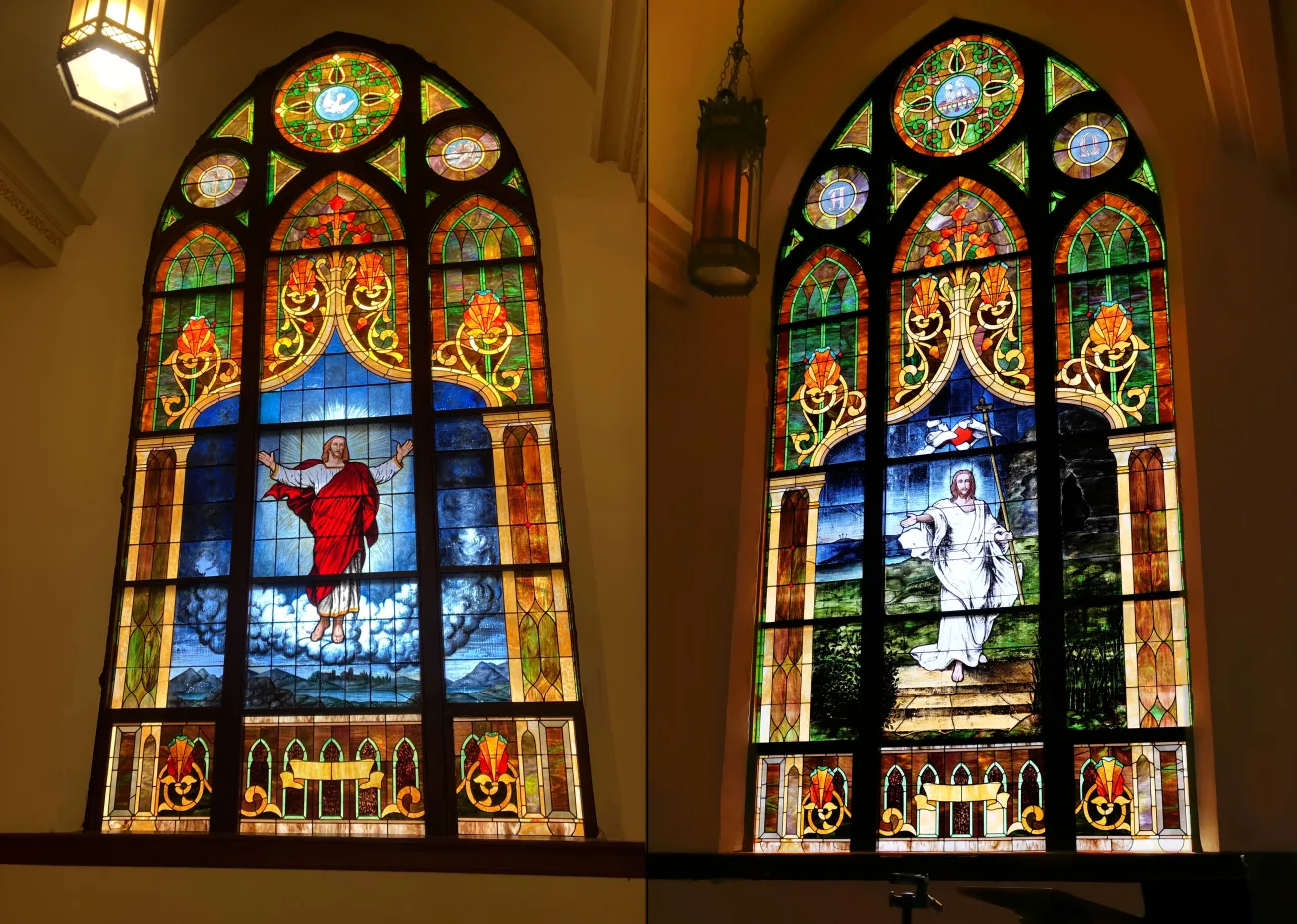
Despite challenges related to structural inconsistencies and supply chain constraints, the stained glass restoration was completed on time and to a high standard. The windows now shine with renewed brilliance and structural integrity, preserving their historical and aesthetic value for generations to come.
We invite you to explore the project gallery below to see the transformation in detail.
Gallery