Restoring the Interior of an Historic Court Room
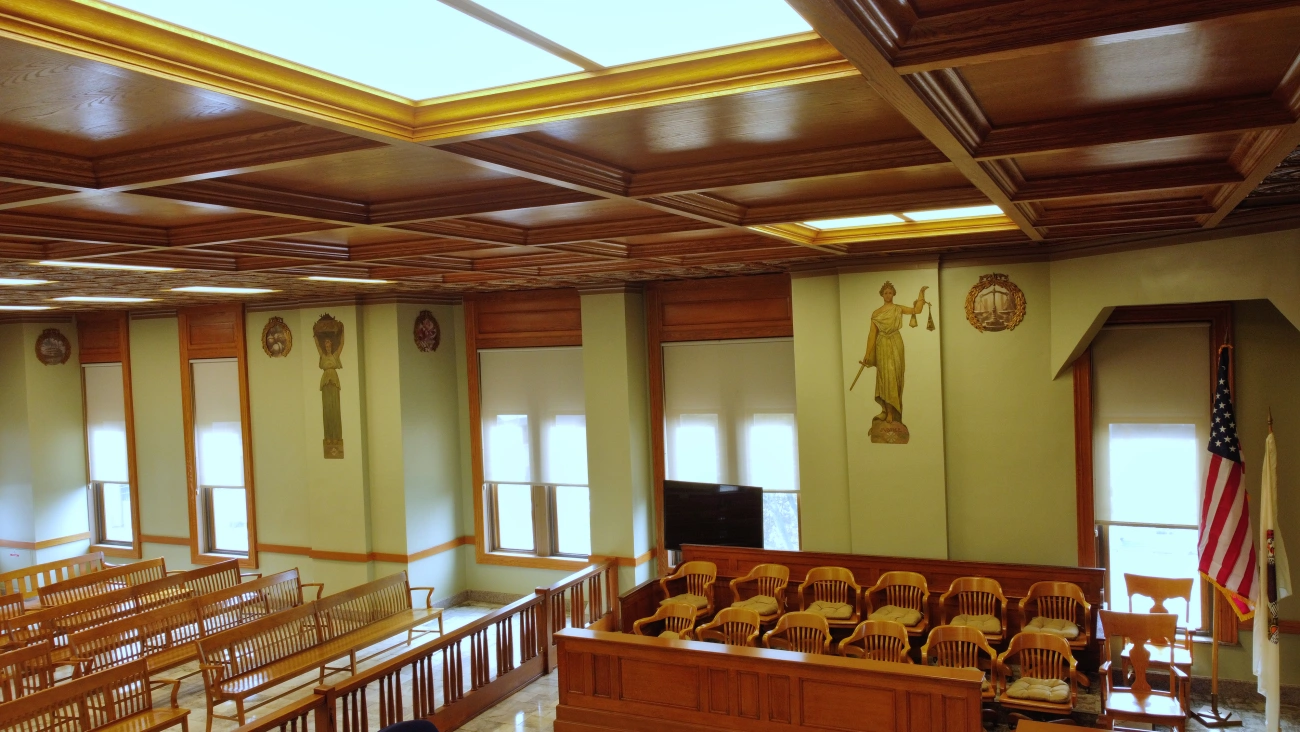
Heritage Restoration led the preservation of hidden murals in the historic Woodford County courthouse, revealing allegorical figures and restoring them. The project also included custom canvas medallions, recreated laurel moldings, and a new coffered wood ceiling using the Woodgrid method.
Project Details
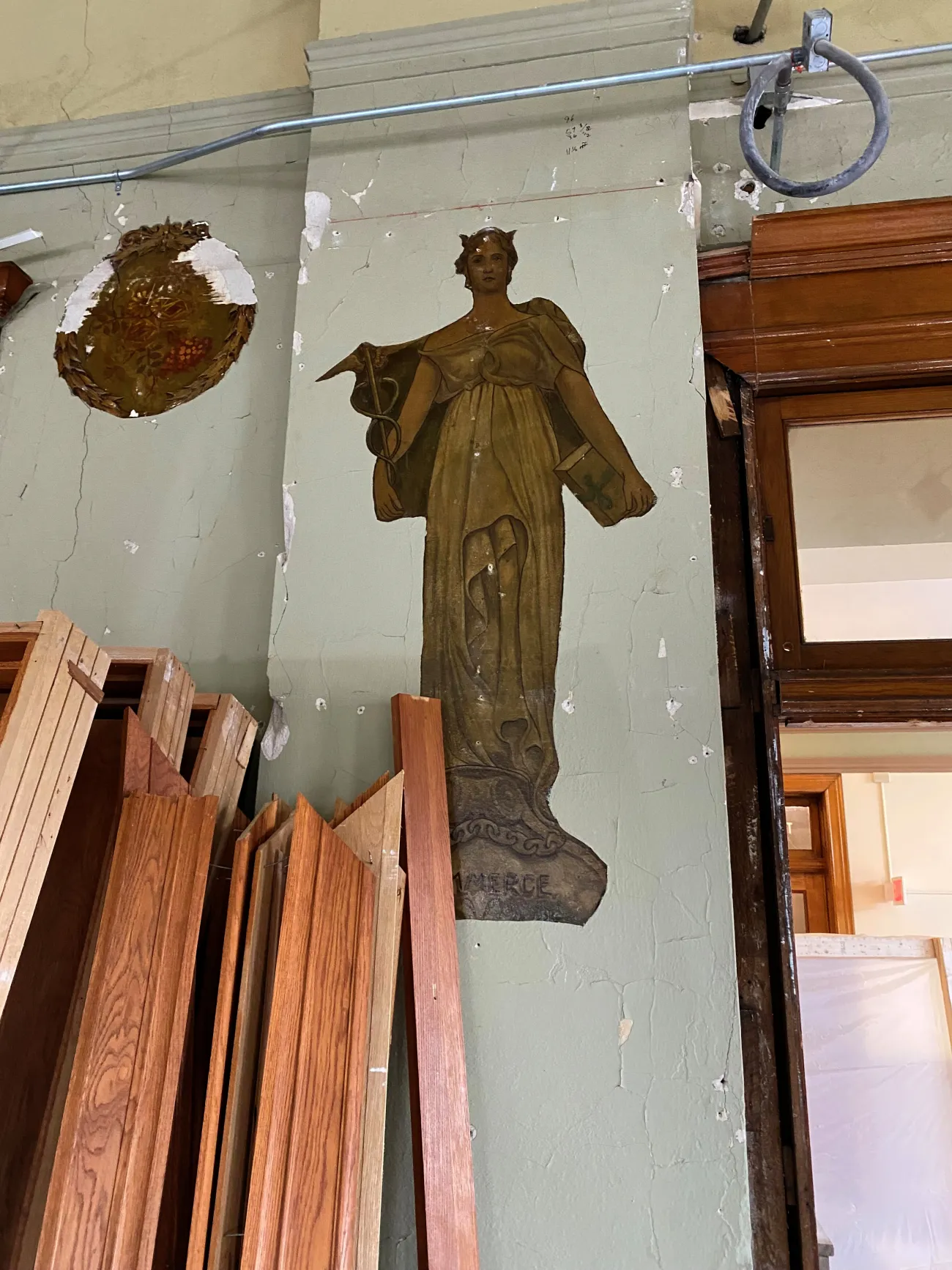
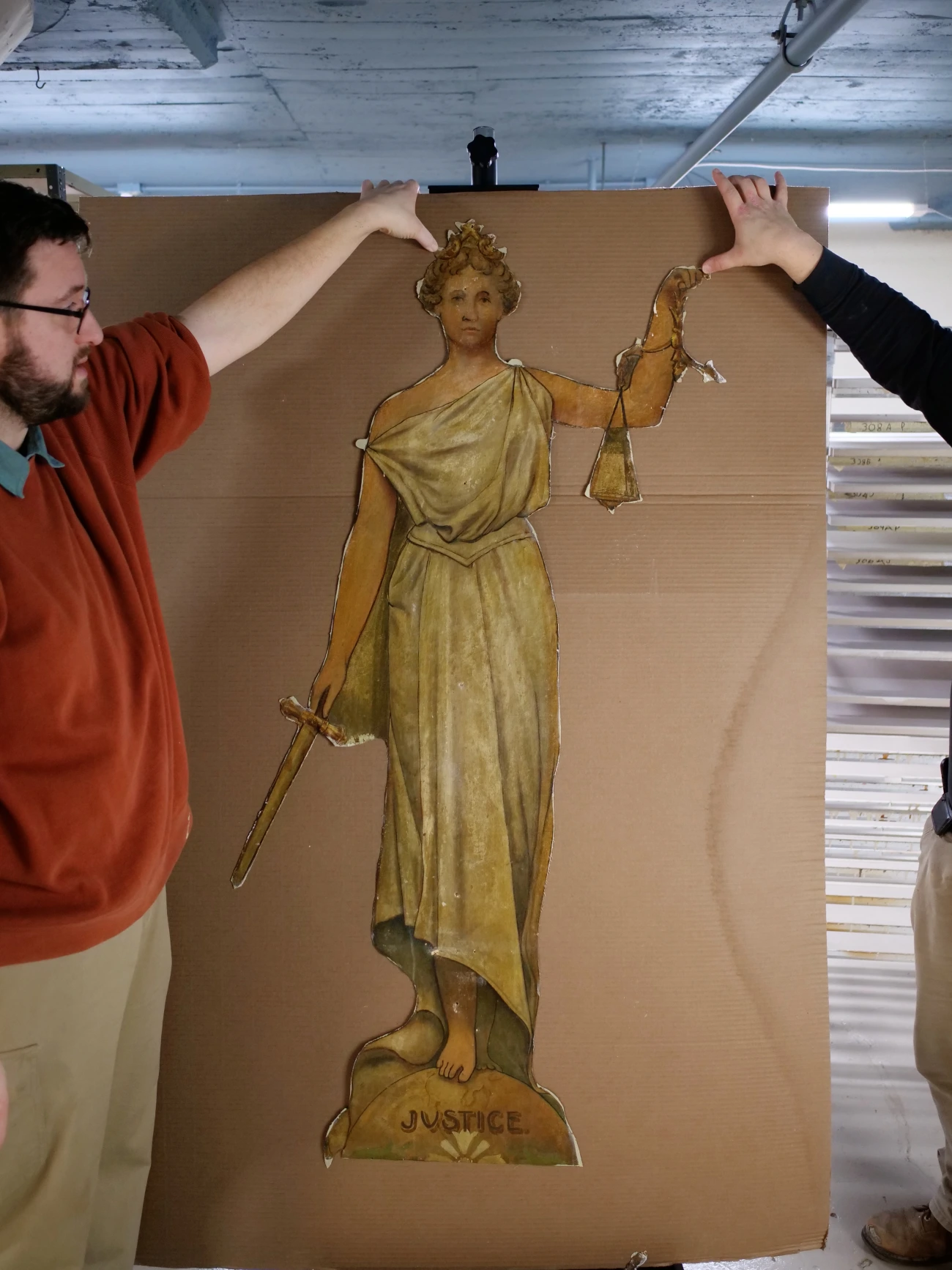
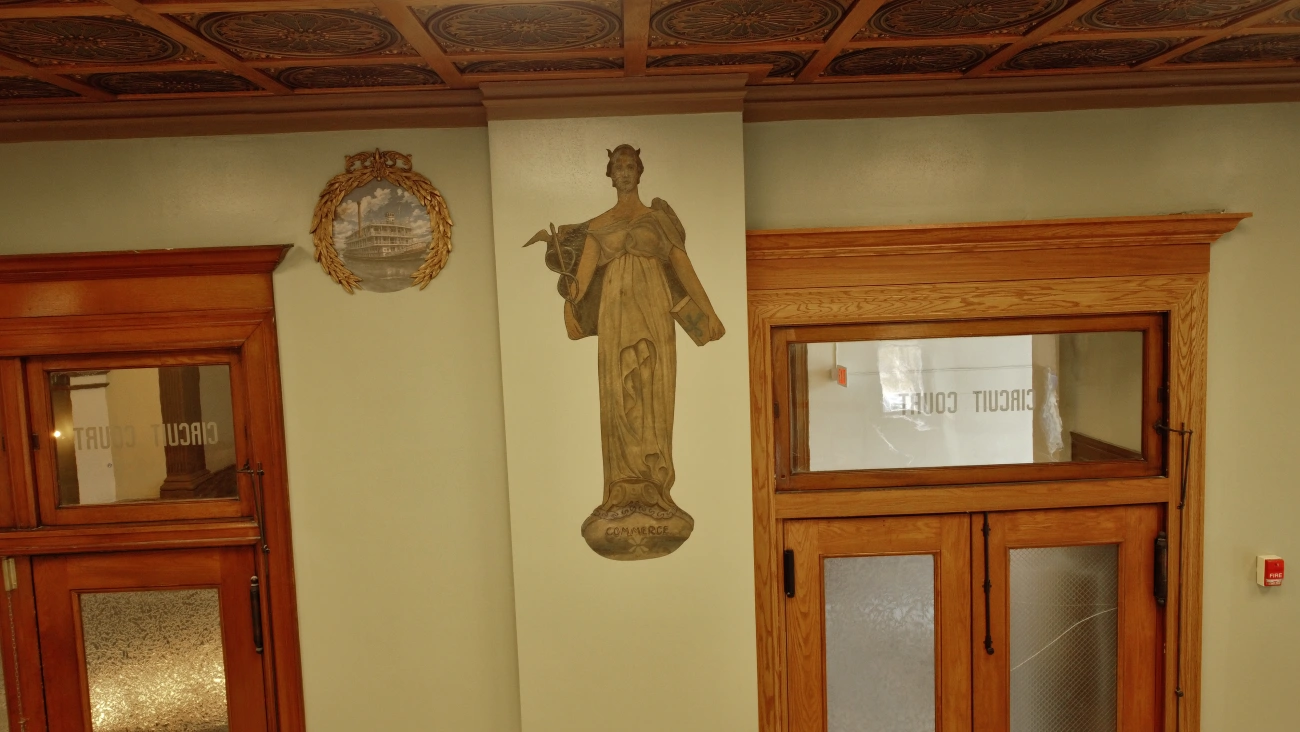
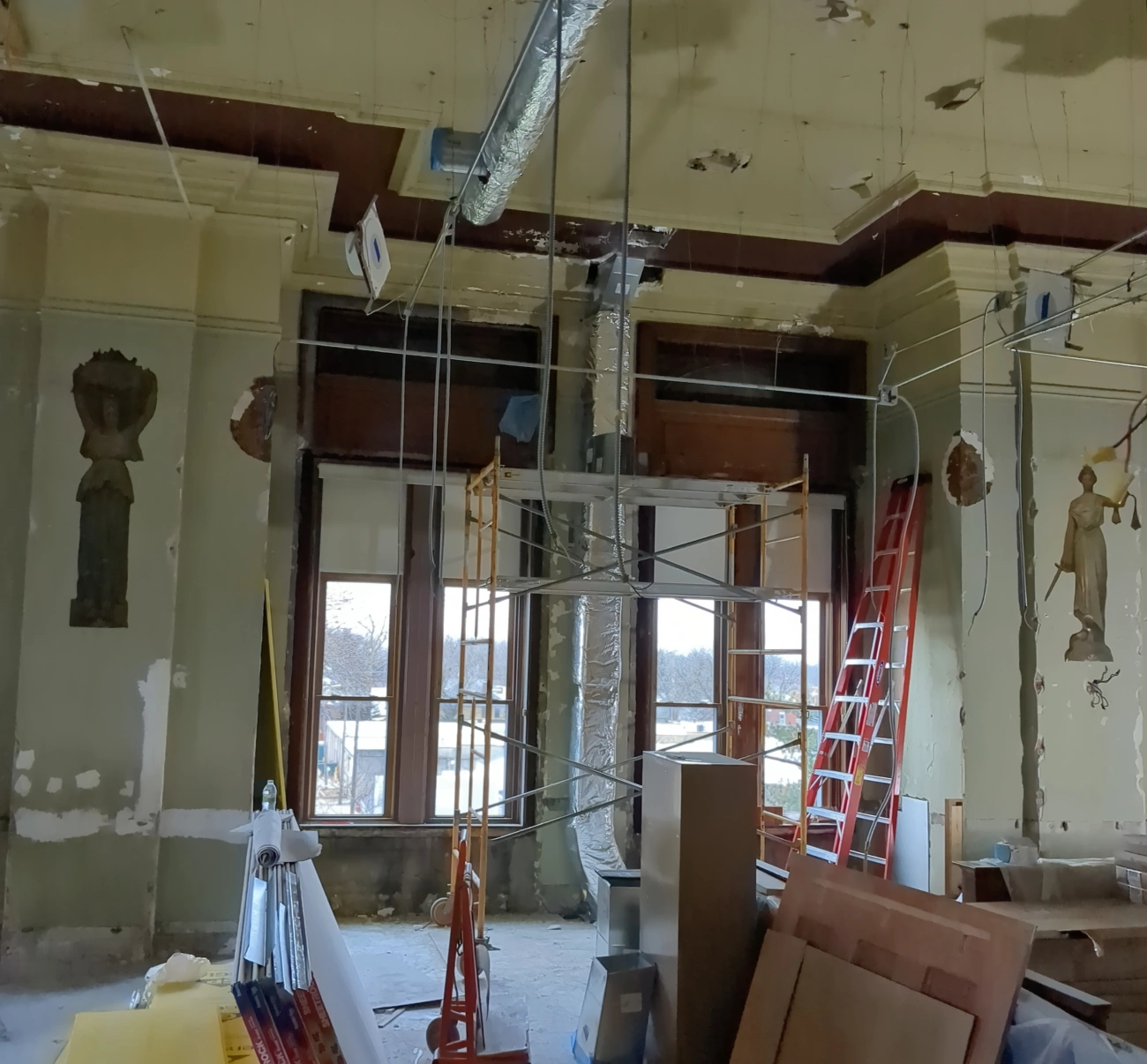
A significant restoration effort in Woodford County, Illinois, has brought to light long-hidden artistic elements within the county's historic courthouse. Heritage Restoration and Design Studio was contracted to undertake specialized preservation work after murals were discovered beneath layers of plaster during a prior phase of renovation. These murals, depicting four allegorical female figures symbolizing mining, commerce, justice, and agriculture, had remained concealed for decades. Upon their discovery, the murals were carefully removed from the walls and transported to Heritage Restoration’s studio, where they underwent detailed conservation.
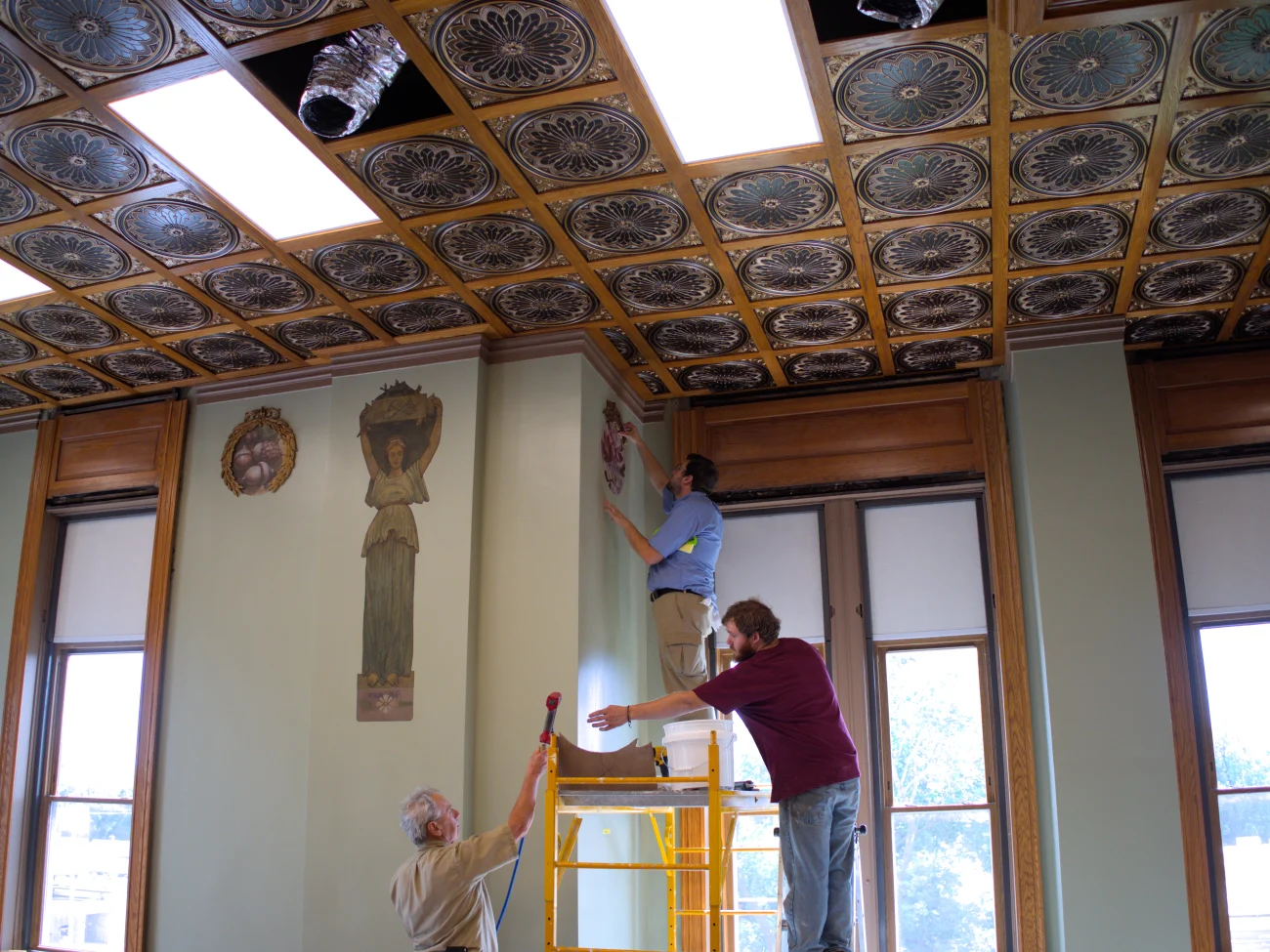
The restoration process addressed substantial damage caused by previous wallpaper installations, which had left numerous holes in the painted canvases. Heritage Restoration repaired the compromised sections, cleaned the surfaces, and stabilized the materials. Once the murals were restored to their original integrity, they were reinstalled in the courtroom, reestablishing a significant piece of the building’s historical and artistic fabric. This effort underscores the importance of adaptive preservation in maintaining civic landmarks while uncovering elements of their original design.
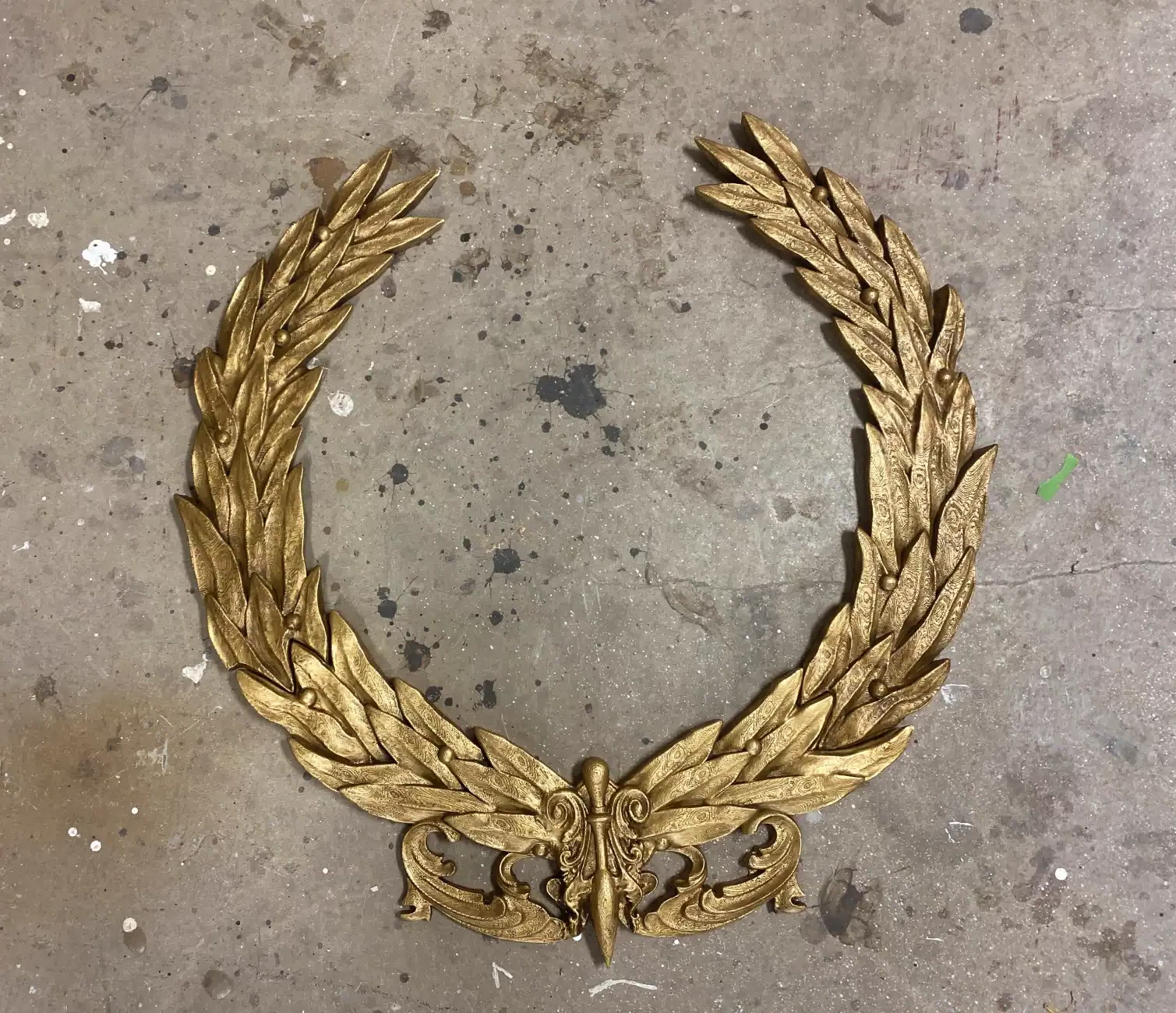
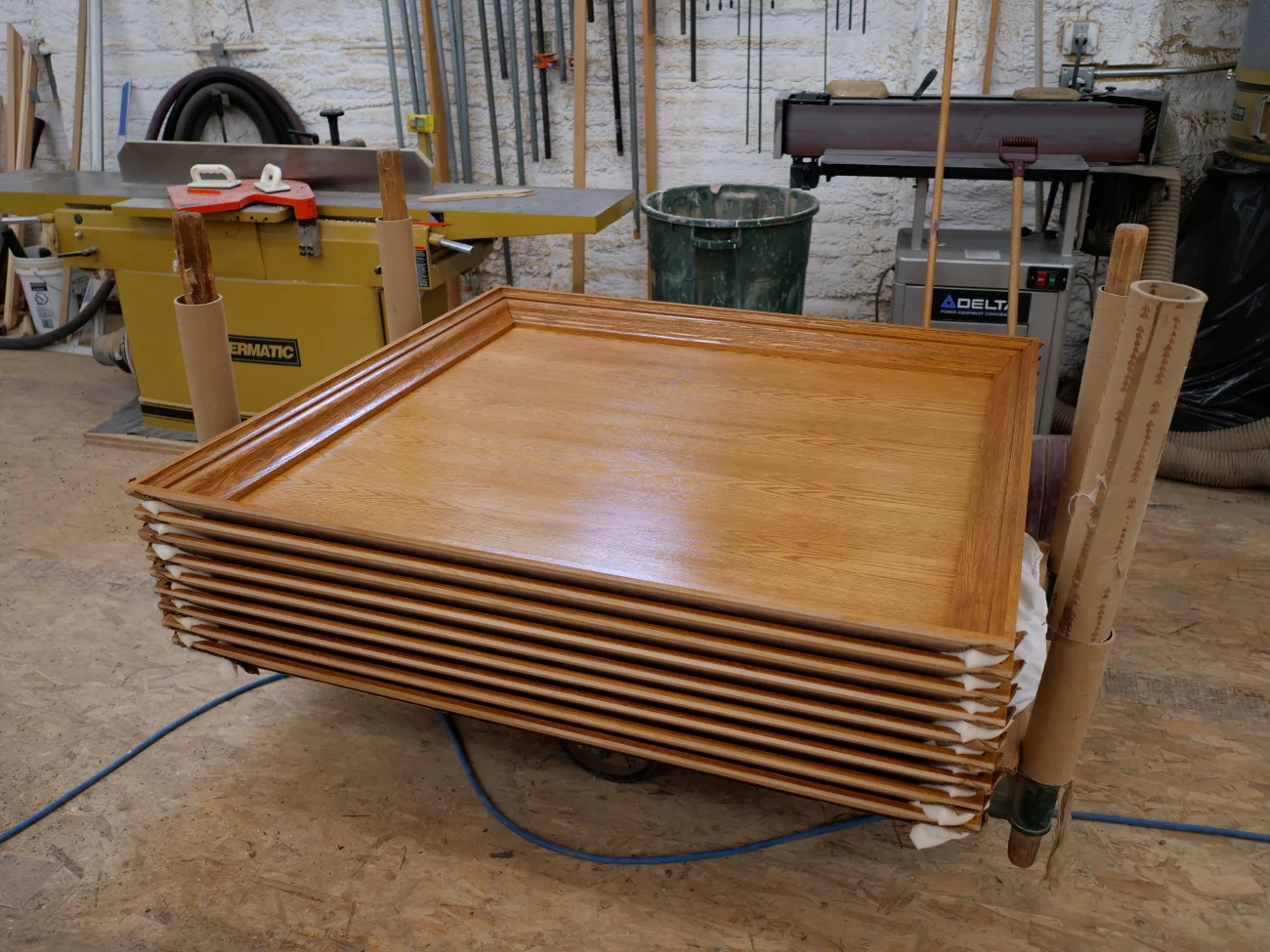
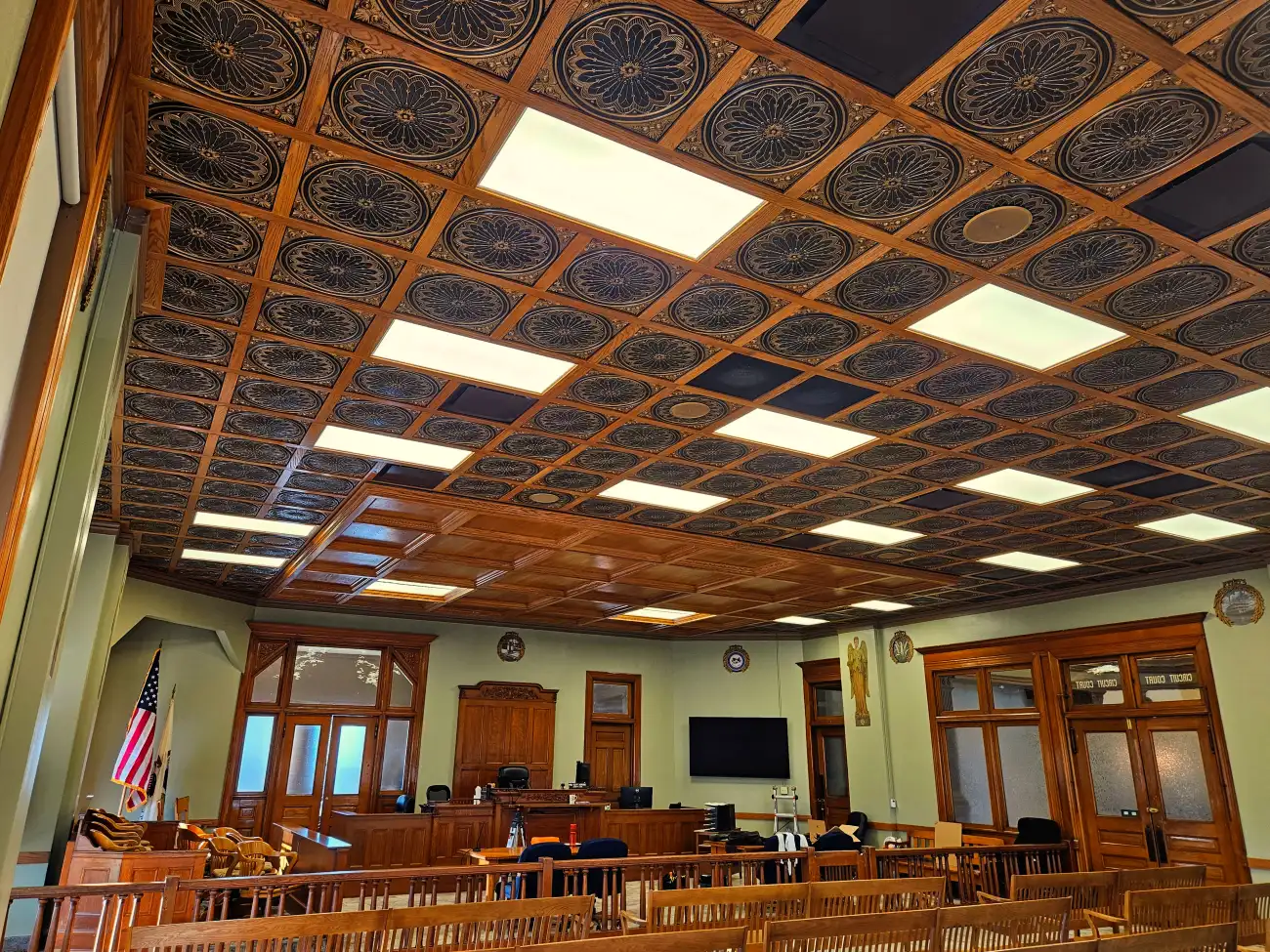
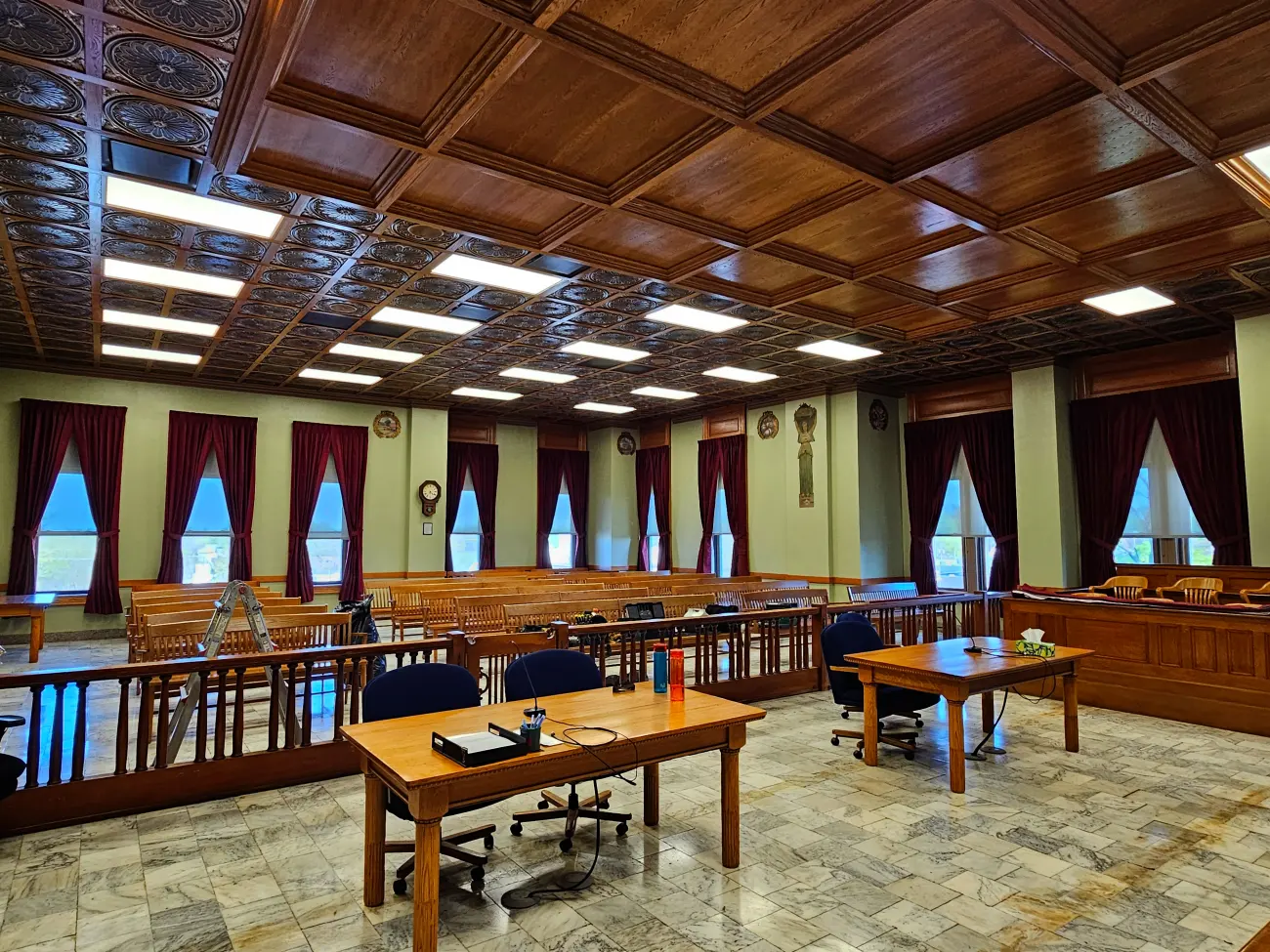
In addition to the mural restoration, two complementary projects were completed as part of the courtroom’s overall enhancement. Ten newly created canvas wall medallions were installed, each depicting imagery relevant to the heritage and identity of Woodford County. These were paired with historically inspired laurel leaf moldings, recreated to match original decorative elements that once adorned the space. A new coffered wood ceiling was also constructed using the Woodgrid method, adding depth and architectural character. A suspended “drop cloud” feature above the judge's bench was incorporated to provide visual emphasis and complete the courtroom’s renewed historic interior.
Gallery